
Bhedibai, aged 60 hails from the Dhadgaon taluka. Following her two strokes in the early part of 2024, she was forced to be limited to her bed for most of the time and walked with support.
Our team along with Dr Parmar visited her and initiated her treatment with medicines and exercise. Soon after, she was given a wheelchair to enable some movement outside her home. In a subsequent visit the team was surprised to see how well she has recovered as not only was she able to move her paralyzed foot but also able to walk short distances outside the house unaided. The team decided it was time for her to start using the walker which gave her a greater deal of freedom of movement and independence. She tried the walker and was able to use it. Her son was taught the adjustments of the walker.
Bhedibai is one of our most motivated patients who has made regular effort with her exercise and despite her age is fully aware of her medical regime and follows it with dedication. At one point she had expressed complete despair about what lay ahead and hadn’t held out any hope for recovery. However, since the team began to support her she has become happy and positive about her future.
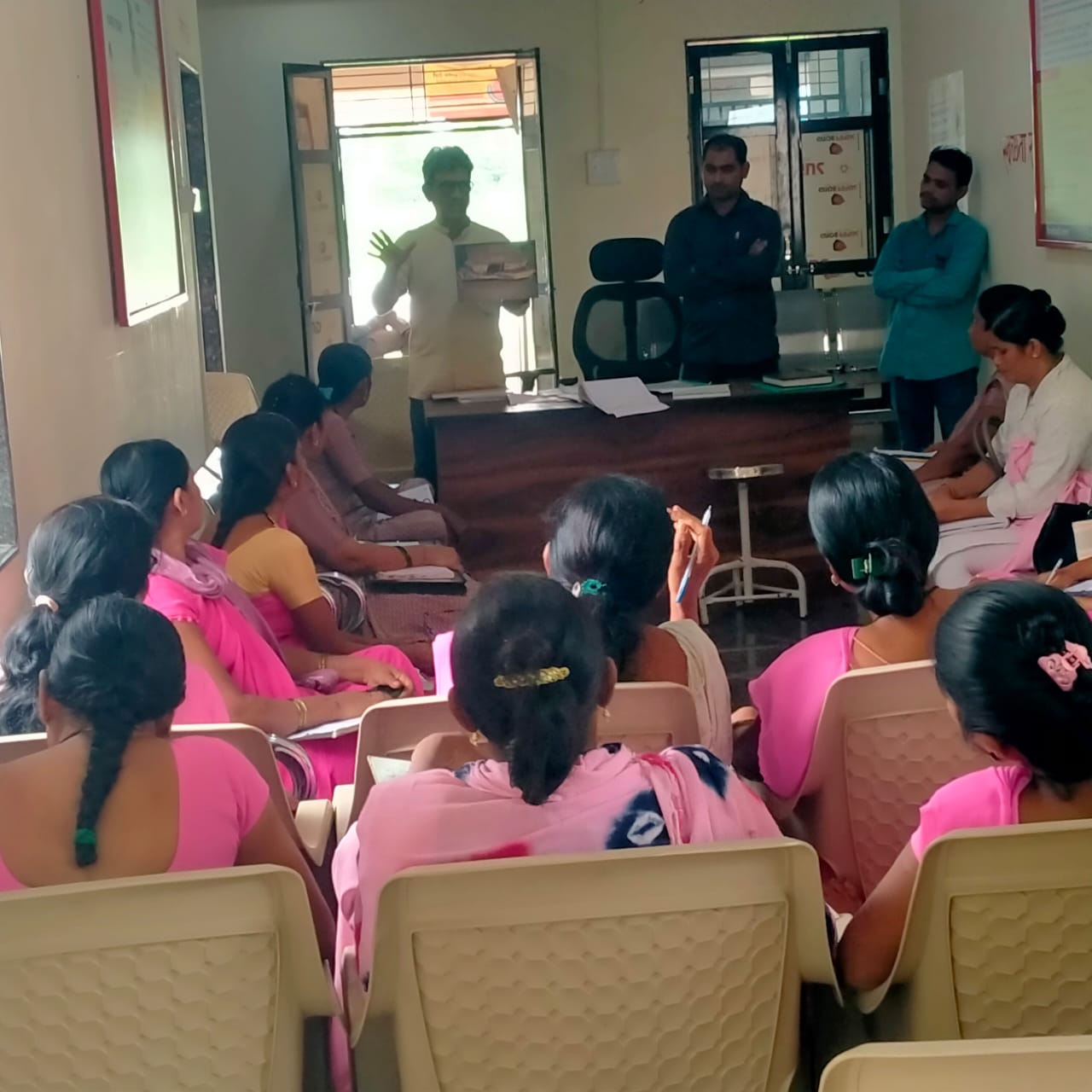
India’s ASHA workers are the backbone of Primary Rural Health Care. ASHAs work tirelessly and selflessly to make basic healthcare facilities accessible to those who live on the margins, particularly in areas like Akkalkuwa and Dhadgaon where we work.
We understand that despite being swamped with numerous government programs ranging from maternal to mental health, it is important to orient ASHAs on the basics of home-based care for chronically ill patients and enable them to identify palliative cases for referral as required.
ASHAs convene monthly at Primary Health Care Centres for a ‘reporting’ meeting. During one such meeting, on 18th July 2024, our team had the chance to present our communication toolkit in Marathi, focusing on home-based care, at Modalpada PHC in Nandurbar. Twenty-five ASHA workers attended this interactive session. The team ensured that the session was both engaging and comprehensible. The feedback from the ASHAs was positive, and they expressed a desire for more sessions like this in the future. Team Karuna evam Shanti Vahini Foundation eagerly anticipates further strategic collaborations and partnerships with ASHA workers.
Samubhai was a 75 year old Adivasi man from Amalpada in Talode block of Nandurbar district, living with his wife who was also his primary caregiver. The family survived on very limited resources, owning a small piece of land and depending on government ration schemes.
Once an organ player in a local band, his life changed drastically after a stroke in 2022 left him paralyzed on the left side. His face became distorted, he lost the ability to speak and move freely, and he remained bedridden. The loss of his livelihood and independence left him depressed and fearful about the future.
When the Karuna evam Shanti Vahini Foundation (KeSVF) Field Team first met him, they found his blood pressure and sugar levels alarmingly high. With timely intervention from doctors through the CCH mobile van, Samubhai was given medication and taught simple exercises to strengthen his limbs. Over time, his health began to improve, and he slowly regained the ability to walk with support.
Recognizing his passion for music, the field team gifted him a portable keyboard during Diwali (a major Indian festival). This thoughtful gesture reignited his spirit, giving him a way to reconnect with the joy he thought he had lost forever. Samubhai was deeply moved, and the smile on his face reminded the team how small acts of care can restore dignity and hope. At a follow up visit in November, he proudly played a song from Sholay for the team, a moment that symbolized resilience, recovery, and the healing power of compassion.
Samubhai has since passed away. The field team’s efforts not only helped him manage his health but also restored meaning to his final months by reconnecting him with music, the passion that had defined his life.
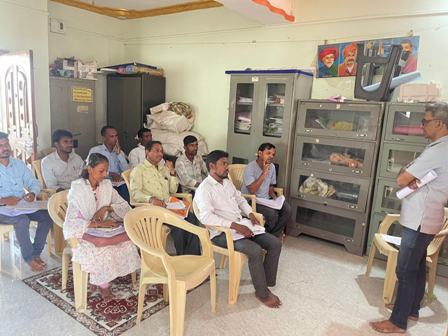
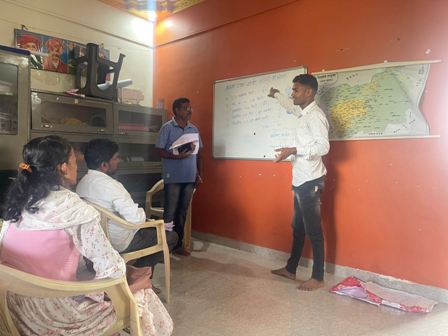
Collaborations and strategic partnerships were identified as a key pillar of the KeSVF model from the very start. Other than working closely with the government, partnerships with other non-profit organizations have also been forged.
Recently, KeSVF began its association with Janarth Adivasi Vikas Sanstha (JAVS) a community-based organization with decades of experience in the district. Following an initial introductory meeting initiated by our donor MHI, the two organizations have already collaborated twice in a short period after understanding each other’s strengths.
Our field team was coming across many cases needing mental health support. JAVS trained our members on mental health through a one-day workshop and shared their experience in Dhadgaon. Following this, our team trained the volunteers of JAVS on conducting a quantitative survey on sickle cell disease and we engaged them to carry it out in Dhadgaon.
We see this as an example in collaboration where NGOs work together to build and benefit from each other’s experience, expertise and contribute to the greater good of the community. KeSVF is constantly looking for creative collaborations with like-minded organizations sharing similar values as ours!
In 2020, a stroke left Bipin paralyzed on his right side. Once the family’s main earner, he suddenly became dependent on others for even the simplest tasks. His wife and children stood by him, but the future felt uncertain. He also struggled with high blood sugar and hypertension, which added to the family’s worries. By the time the Karuna evam Shanti Vahini Foundation’s field team began visiting in May 2023, Bipin was partially mobile, withdrawn, and struggling with the loss of independence.
With regular visits from the field team, guided physiotherapy, and clinical follow ups from doctors at Chinchpada Christian Hospital (CCH), Bipin slowly regained strength. On one visit, they prayed with him, offering reassurance and hope. This mix of medical care, physiotherapy, emotional support, and encouragement helped him hold on.
Step by step, progress came. By mid-2023, Bipin proudly shared, “Now when my family goes to work in the fields, I cook for them, and all are happy.” His depression lifted as he re-engaged with daily life, laughing with the team, sharing stories, and helping with home and farm work. From struggling to walk, he reached the point where he could move without a stick. His wife, once overwhelmed, now stayed with him, proud of his recovery. Together, they repaired their home, and neighbours began to notice his improvement.
By late 2024, Bipin told the field team: “I am living a good life because of you. You have worked harder on me than my own family. I had never thought that I will be able to work again.” His family, once forced to mortgage land and work in brick kilns, was slowly regaining stability. The government’s housing scheme brought new hope, and Bipin himself helped in building their new home.
At the latest visit, Bipin was found digging a septic tank for his household toilet, something unimaginable just two years earlier. His journey from paralysis to purposeful work is a testament to resilience, family support, and timely care. The team continues visiting him, drawing strength from his recovery and finding hope as they walk with other patients in critical illness.

Image:with consent
Anju Sayji Vasave, a 35-year-old woman from Kakadkhut, Nandurbar, was once a bright student who topped her exams in school. In her teenage years, she began experiencing a serious mental health condition that gradually disrupted her daily life. She became withdrawn, distressed, and unable to participate in household responsibilities.
The impact on her family was profound. Due to stigma and misunderstanding, they were evicted from their village, and her siblings faced difficulties in finding marriage partners. With limited income and no government support, the family lived under immense social and economic pressure.
Change began when treatment support was provided through Karun evam Shanti Vahini Foundation (KeSVF), in close collaboration with the Chinchpada Christian Hospital (CCH) team of doctors. While CCH offered timely medical expertise, Team KeSVFvisited regularly to encourage Anju and support her family. Together, they worked patiently, helping her regain confidence through small steps. Gradually, Anju began bathing regularly, and assisting with household chores.
A turning point came when the team brought her new clothes. For years, Anju had torn her own clothes and remained hidden under a blanket. Receiving fresh clothes was not just practical, it was a deeply symbolic act of restoring dignity. Her mother said with relief: “When she wore the new dress, it felt like my daughter was herself again.”
Gradually, Anju began to thrive. She now cooks, collects water, manages household tasks when her mother works in the fields, and greets visitors with warmth. Her father proudly recalled: “She was a topper in school. We thought she would never recover, but now she is completely fine.” And her mother expressed gratitude: “Thanks to Team KeSVF, my Anju has come back to us. We can’t thank you enough.”
Today, at 35 years, Anju is no longer defined by her illness. She is recognized for her resilience, her contributions at home, and her ability to live with dignity. These contributions are now acknowledged not only by her family, who feel immense pride, but also by neighbours who see her as an active, caring presence in the community.

Images:with consent
In Nandurbar’s scattered villages, reaching specialized palliative care is never simple. The terrain is rugged, connectivity unreliable, and families often live far from health facilities. For patients coping with disability or chronic illness, these barriers can make even basic follow-ups feel out of reach. Yet, with the right use of technology and community support, care finds a way.
On 26 February 2026, Team Sukoon Nilaya Mumbai helped arrange a teleconsultation with Dr. Nutan Korgaonkar, Audiologist and Speech Therapist, for Shivlal Pawara (58) of Dhanaje BK, Nandurbar. Mr. Pawara suffered a stroke five years ago and continues to live with paralysis on his left side. His immediate struggles, difficulty swallowing and slurred speech, had led to loss of appetite and rising blood sugar levels.
That morning, Team KeSVF’s nurse Dasharath arrived early to prepare. He checked vitals, ensured Shivlal’s daughter (a nursing student) was present, and tested the internet. Inside the house, lighting and network access were poor. Without hesitation, Dasharath moved the consultation to a neighbour’s courtyard where Wi-Fi was available, ensuring the session could proceed smoothly.
During the call, Dr. Nutan asked careful questions, observed Shivlal drinking water, and identified choking episodes. She demonstrated three exercises to ease swallowing and improve speech, guiding Shivlal to perform them live. Her advice was clear: ten repetitions every two hours under supervision. She also showed the correct way to drink water, making the guidance practical and immediately usable.
To ensure continuity, Dr. Nutan proposed weekly follow-ups. Dasharath committed to training the caregiver, sharing a WhatsApp recording of the session, and sending videos of Shivlal practicing the exercises. With regular practice, Dr. Nutan emphasized, improvement in swallowing could be expected within a fortnight, while progress in speech may take considerably longer.Care finds its way to families in the remotest corners when communities, caregivers, and technology join hands

Image of Asha Parmar used here with permission from her family
Asha Sanjiv Parmar, 28, from Dhanaje BK in Dhadgaon, lives in a household where mental illness has deeply affected multiple members. Two of her siblings also struggle with mental health conditions, leaving the family under constant strain. Her mother, as the primary caregiver, often felt overwhelmed by the responsibility of managing three children with complex needs.
Asha’s condition was particularly severe. She experienced epileptic fits alongside psychiatric symptoms such as sleeplessness, aggression, and delusions. At times she screamed through the night, pulled her own hair, and even hit her mother. Despite medicines from the rural health center, her condition worsened. She stopped eating properly, became violent, and the household atmosphere grew tense and fearful.
In February 2026, the KeSVF field team coordinated her assessment with Dr. Dinesh Valvi, a psychiatrist in Nandurbar. The journey itself was not easy. Traveling from Dhadgaon to Nandurbar meant navigating difficult terrain and long drives through hilly rural roads. Taking three patients together for assessment was a logistical and emotional challenge, but the family persevered with the team’s support. Dr. Valvi emphasized that at least one in person consultation was essential to properly evaluate her condition, after which follow ups could be managed through teleconsultations, reducing the burden on the family while ensuring continuity of care.
The impact was significant. Asha stopped pulling her hair and hitting her mother. She began sleeping better, which eased the strain on her parents. Her appetite improved, and she started eating more regularly. The household atmosphere became calmer, and her siblings felt less afraid. The family expressed deep gratitude, saying that for the first time in months they felt relief and hope. They no longer had to tie her with ropes to manage her aggression, and the household regained a sense of dignity and stability.
Importantly, Dr. Valvi is now consulting with KeSVF’s wider mental health cohort of patients, and this has only strengthened the project. His timely treatment and referrals ensure that families like Asha’s receive professional care when they need it most.

Tanisha at Civil Hospital for Disability Certificate
We at Karuna evam Shanti Vahini Foundation (KeSVF) share with deep sadness the passing of Tanisha Vasave, a young girl of 13 from Kothali village, in Akkalkuwa block. Tanisha lived with severe cerebral palsy and was cared for entirely by her mother, whose love and patience shaped every day of her life.
Our first visit in December 2023 revealed the extent of her challenges and her mother’s exhaustion. A fresh set of clothes, caregiver support by KeSVF nurse supported by medical care brought dignity and comfort. From KeSVF’s early days of intervention for Tanisha, a donor from Mumbai became a silent companion in her journey. Through her generosity, Tanisha received medicines and nutrition support. This brought immense relief to the family.
Over time, the team worked with Tanisha’s family to secure her birth certificate, Aadhaar card, and ration card inclusion. These steps made her eligible for disability linked welfare schemes. In June 2025, she was taken to Civil Hospital for evaluation, and her disability certificate process began. By early 2026, her family had been approved for monthly support under the Sanjay Gandhi Niradhar Scheme, with benefits scheduled to begin this month.
Tanisha passed away on 8 April 2026, before the first instalment could reach her family. Vasant, social worker from Team KeSVF joined her parents for the twelfth day ritual, offering condolences and a monetary contribution. Her parents expressed gratitude, saying the team’s presence and support had made their journey less lonely.
Tanisha’s memory will remain a constant source of inspiration in all our caregiving endeavours.
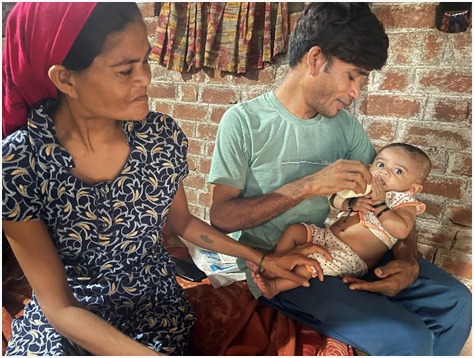
Rashidabai lived in Retpada with her husband and their infant child. Her diagnosis of tongue cancer brought immense uncertainty and fear into the family. Doctors confirmed that it was already in the third stage, which meant the treatment process would be long and demanding.
She began chemotherapy, which was painful and exhausting, often leaving her overwhelmed. At times she expressed despair, once telling her husband during chemo, “I don’t want this anymore, I just want it to stop.” Despite the suffering, she tried to hold on to small joys such as playing ludo with her husband, watching videos, and caring for herself as best she could. Her husband stood by her side, while her sister in law helped with the baby and household needs.
The KeSVF’s Field Team (FT) played a crucial role throughout her journey. They guided the family through complex medical decisions, explained treatment options, and coordinated with hospitals when emergencies arose. When she vomited blood and transport was unavailable, the team arranged a vehicle and accompanied her to the hospital. They also counselled her when she felt hopeless, reminding her that she was not alone.
As her condition worsened, Rashidabai voiced her deepest wish: “I just want to be with my child.” Honouring this, the FT supported the family’s decision to bring her home, ensuring she could spend her final days surrounded by love. She passed away peacefully, close to her child and husband.strong>
After her passing, the FT continued to stay connected. They checked on the baby’s well being, encouraged the husband to rebuild his livelihood, and explored ways to link the child to welfare schemes. Their ongoing support ensured that care extended beyond the patient, embracing the family left behind.

Mohan (in blue) and Sharmila (in white) are flanked by the District team; Image with consent
Mohan (27) and his sister Sharmila (21) from Talai, Dhadgaon, have lived for years with progressive disability, limping, and gradually losing vision. Their widowed mother, burdened by poverty, often explained the illness as “black magic,” echoing the fate of her late husband.
The Karuna evam Shanti Vahini Foundation (KeSVF) stood by the siblings from the time we enrolled them in our care. We provided Mohan with a walker to help him regain some mobility and ensured regular medicine support for both him and Sharmila. Yet, despite these efforts, the family’s challenges continued to grow. Their living conditions were becoming increasingly difficult. They needed structured medical evaluation and systemic support to address their worsening situation.
Recognizing the urgency, KeSVF formally approached District Collector Nandurbar, Dr. Mittali Sethi, presenting Mohan and Sharmila’s case. Dr. Sethi mobilized her team, who visited the siblings at their home. Both were formally assessed and identified with a genetic blood disorder, a moment that replaced years of uncertainty and superstition with medical clarity. For their family, it was the first time someone explained the illness, offering hope instead of fear. Yet the journey was far from complete: the neurological evaluation was still pending, and Mohan continued to struggle with his fading vision.
Soon after, the Collector’s Office arranged an ambulance journey of nearly two and a half hours to Civil Hospital, Nandurbar, accompanied by an ASHA worker and the Medical Officer. At the hospital, CT scans were conducted for both siblings to assess neurological aspects, Mohan’s bacterial eye infection treated by ophthalmologists, and regular physiotherapy sessions were initiated, with exercises recorded for follow-up at home. For three days, KeSVF’s nurse Rahul was with Mohan and Sharmila, ensuring they received their medicines, were supported through the hospital process, and were safely taken home after discharge. Post-discharge, our nursing team continued physiotherapy sessions at home, sustaining the progress made in hospital.strong>
Today, Mohan has received his disability certificate and welfare benefits, securing financial relief and recognition of his rights. Sharmila’s certification process is underway. Team KeSVF is deeply grateful to District Collector Dr. Mittali Sethi and her team, whose compassionate leadership became the turning point in Mohan and Sharmila’s journey.
This photo of Mohan and Sharmila was taken with informed consent. Special thanks to KeSVF field team members Yateen, Rahul, and Dasharath for their tireless efforts.

Image:with consent
Gulabibai lives in Palkha, a village in Dhadgaon, Nandurbar. She’s seventy five. She made ropes, cared for her family, and kept her home running. These days she is living with coronary artery disease. Her body feels heavier than before, and even short walks leave her breathless. Most of her time is spent in the courtyard, watching her grandchildren play. Her son Suresh is her main caregiver, and the KeSVF team visits her regularly. They support her with medicines, active listening, and provided her with a walker, which helps her move around safely and gives her a little more independence.
Her husband, who was close to a hundred, had a leg wound that turned into a serious infection. His health slowly worsened, his legs swelled, fluid gathered in his lungs, and weakness kept him in bed. The family’s worry about him often made Gulabibai’s chest pain worse. She would say, “When he suffers, I feel it too.” The team supported both of them, helping with his wound care and guiding the family through those difficult months.
When her husband passed away, the house grew quieter. She told the team, “You have always been with us in our joys and sorrows.” Since then, she has been trying to adjust to life without him. She still uses her walker and keeps her routine, but she often says she feels lonely. The team spends time talking with her, listening to her memories, encouraging her to walk a little, and reminding her she is not alone.
Recently another worry entered her life. Her younger son was diagnosed with a brain tumour and is preparing for surgery. She says, “Now my son is sick too. I don’t know how much more I can bear.” With this, she feels even more vulnerable. Sometimes she thinks she is becoming a burden on her family. These feelings of guilt and fear mix with her physical tiredness, making her days heavier. Her son has now been brought under KeSVF’s care and will be supported by the team, which brings her some reassurance. The team offers presence, counsels her gently, helping her manage her stress and reminding her that she deserves care and dignity, even as she worries about her son.
The courtyard is her world, a space where she can still see life moving around her. The KeSVF visits bring rhythm and reassurance. She says, “It feels better when you come. I feel like someone remembers me.”
We are deeply indebted to our field team members Dasharath Shinde and Yateen Sawant, whose care went beyond physical comfort to encompass the power of presence.
Video taken with consent
At just 20, Jayesh from Dahel in Nandurbar has already been living with a progressive disability for years. For too long, unclear diagnoses meant he couldn’t get a disability certificate, leaving him locked out of welfare schemes.
Our team at Karuna Evam Shanti Vahini Foundation (KeSVF) stood by him, helping with documents, mobility aids, physiotherapy and repeated home visits. The breakthrough came when we referred his case to Dr. Mittali Sethi, Collector Nandurbar and the DHO team. They ensured that the health team tracked him and conducted a solubility test for sickle cell anemia, adding another important piece to his health profile.
With their support, Jayesh was finally assessed at Civil Hospital, Nandurbar, where doctors diagnosed him with chronic progressive upper motor neuron (UMN) paraparesis and certified him with 75% permanent disability. This formal certification is what unlocks his access to welfare entitlements.
Getting him to the hospital, however, was not easy. Because of the rains and the already difficult terrain, villagers first helped him reach a motorable road, from where we could take him by SUV. We are sharing a short video of Jayesh making his way to the road, supported by villagers as rain fell over already difficult terrain. It offers a glimpse into the everyday reality of our communities in hard-to-reach tracts of Nandurbar, where even reaching a hospital becomes a test of courage and resilience.
For Jayesh, this certificate is more than paperwork. It is recognition of his struggle and a key that unlocks dignity and rightful welfare entitlements. Our KeSVF team, will now continue working to ensure Jayesh receives his benefits under Maharashtra’s disability welfare scheme.
A heartfelt thank you to Dr. Mittali Sethi, and the team from the DHO office, Abhinav, Sameer, Vasant, Rahul, and everyone who helped make this possible. Special thanks to the Mariwala Health Initiative, for their continuing invaluable support and encouragement.
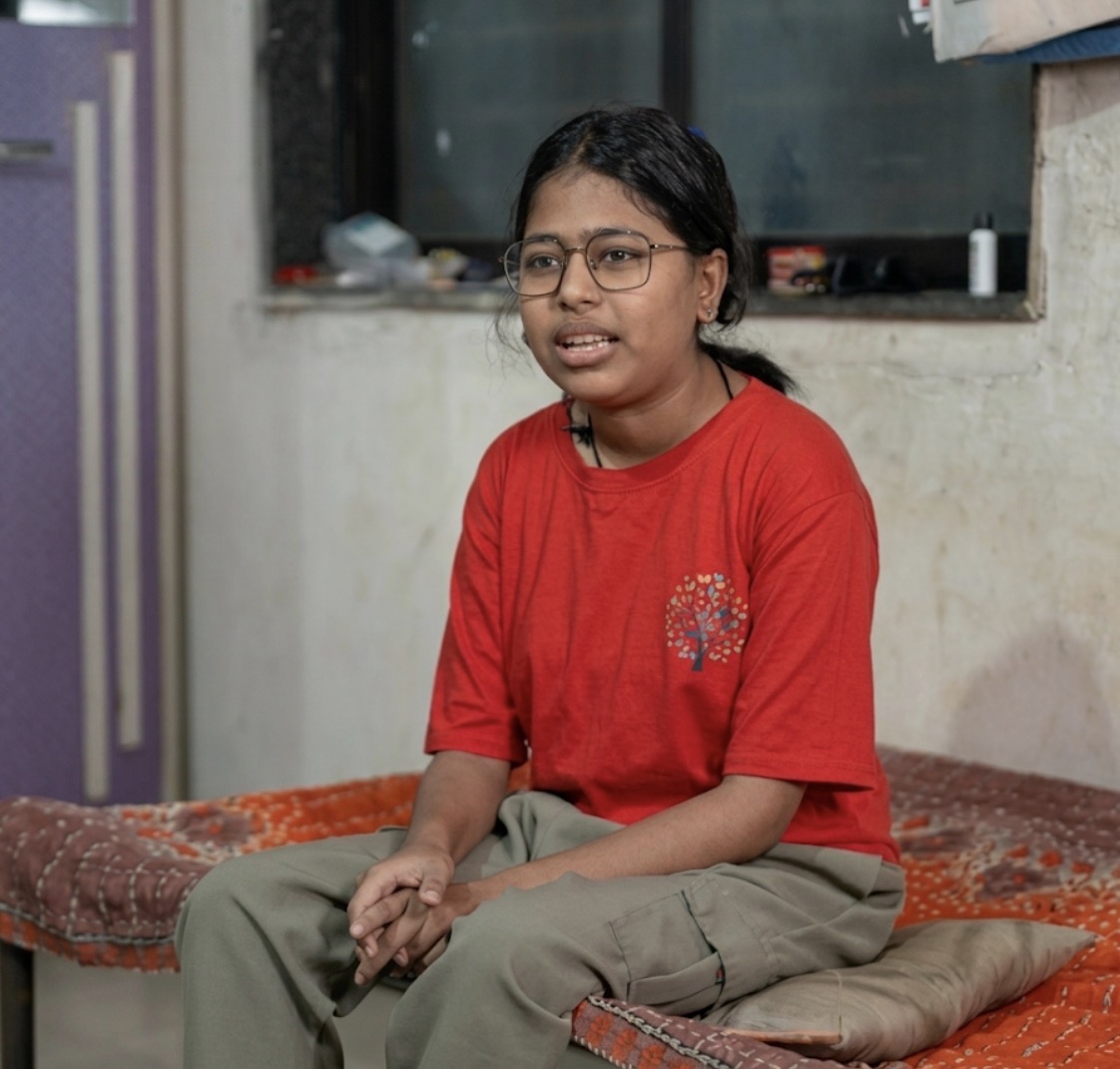
Image:with consent
Laxmi Chitod, a 20 year old from Dhadgaon, Nandurbar, dreams of becoming a doctor. She lives with sickle cell disease and has already undergone one hip replacement surgery. Her other hip bone is deteriorating, and along with her daily hydroxyurea dosage she now needs IV tramadol to manage her pain.
Her father, Vijay Chitod, is a healthy carrier of sickle cell. He is the only caregiver for both Laxmi and her mother, who also has sickle cell disease and recently underwent hip replacement surgery. With no formal support system, he is caught between caring for two loved ones while managing household responsibilities.
During her recent crisis, when pain kept her awake for four nights, Laxmi reached out to Parag, our Programme Manager. With the support of our outreach team, her father, already burdened with caregiving duties, was counselled about pain management and the use of morphine. It was decided to take her to Chinchpada Christian Hospital (CCH) for pain management. The journey to CCH is not easy, as families have to travel 120 kilometres between Dhadgaon and Navapur through difficult terrain. KeSVF ensured all arrangements were in place and Laxmi was accompanied by her father and nurse Kavita. Our nurse stayed with Laxmi at CCH, while her father had to resume work and attend to his wife.
On admission at CCH, she was immediately attended to and morphine was included as part of her treatment. Gradually her pain reduced and she was able to sleep. By the fifth day of admission, her pain had finally settled.
This relief was possible because of Dr Ashita and her team at CCH, and because of the dedication of Kavita, Yateen and Dasharath. Both Laxmi and Dr Ashita have also featured in our YouTube series on sickle cell disease created for the Collector’s Office, foregrounding patient and caregiver voices, and healthcare providers’ perspectives. Despite her challenges, Laxmi continues to participate in life with courage. She even joined the Independence Day celebrations at CCH.
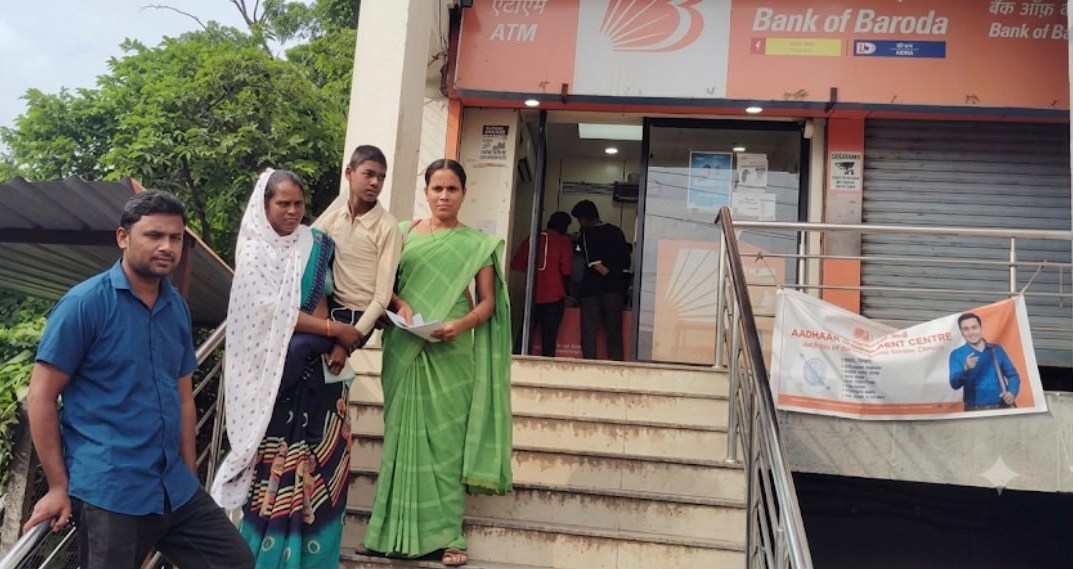
Image with consent
KeSVF’s partnership with Jeevan Vidya Trust in Nandurbar began a year ago. The Trust empowers tribal children and women through education, self-help groups, and community support. As part of this collaboration, Jeevan Vidya’s community volunteers work alongside KeSVF in villages across the block. This joint effort helps families in remote areas access care, support and entitlements.
During one such visit, the team met Mehul Sunil Valvi, a 14 year old boy with cerebral palsy. His father, a daily wage worker earning about ₹35,000 a year, takes him along to work so he can feed him on time and keep him safe. The family had a disability certificate but no link to government schemes. The KeSVF team, led by Nurse Rahul with Jeevan Vidya volunteer Mogi Bai, identified the Sanjay Gandhi Niradhar Yojana as potential support for the boy.
The process was arduous. Opening a bank account was the first hurdle. The family was refused at four banks due to rules and minimum balance requirements. Finally, Bank of Baroda agreed, but KYC issues caused more delays. Given the lack of accessibility in many offices and banks, Mehul had to be carried. The team stood by her side, advocating with the manager and explaining the family’s situation and need.
After the account was opened, came the scheme application. The team made multiple visits to the tehsil office, filled forms, and sought signatures from the Talathi and Gramsevak. In the end, the Talathi’s office made a home visit to check Mehul’s condition and the family’s circumstances.
With this verification complete, the KeSVF and Jeevan Vidya team submitted the online application through the government portal. Online submission is the final step that registers the case so benefits can start. For Mehul, this means monthly disability support under the scheme, sent directly to his Aadhaar linked bank account.
Finally, KeSVF’s nurse was told that all formalities were complete and he could check the status of benefits reaching Mehul by the next month. This marked the end of weeks of visits, some disappointments, and unexpected delays.
For Mogi Bai this was a learning experience. She feels proud and thankful to KeSVF that together they could help Mehul from her own village receive the support he deserved.
copyright: Karuna Evam Shanti Vahini Foundation